
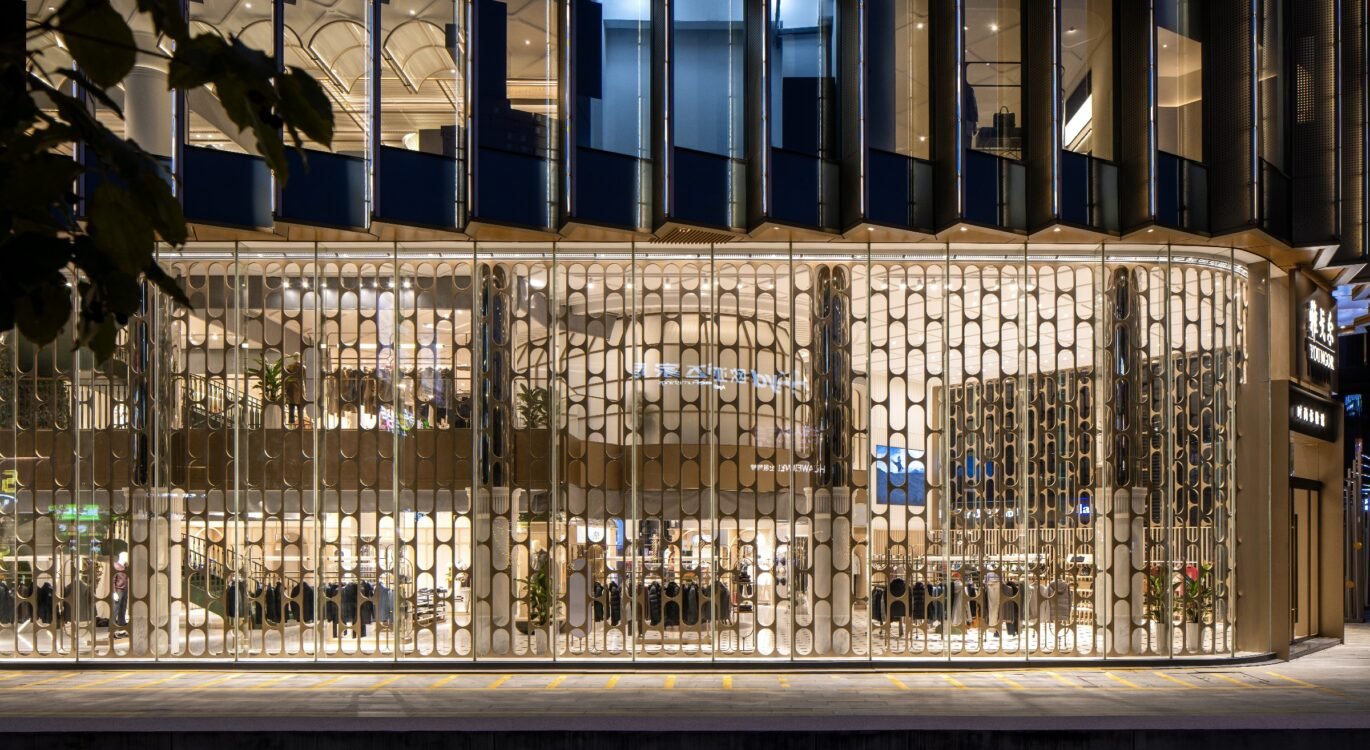
How Lighting Redefines the Nighttime Identity of Commercial Spaces
In commercial space design, daylight belongs to the facade, but the night belongs to lighting. Lighting is no longer just about visibility—it’s a powerful spatial language that brings architecture to life, evokes emotion, and reshapes how a brand is perceived after dark.
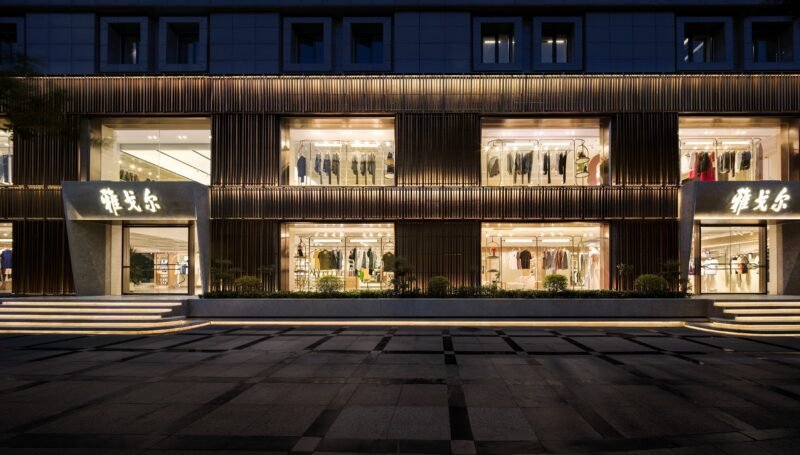
The Three Core Values of Nighttime Lighting
- Attract Attention
In fast-moving urban environments, effective lighting helps a commercial space stand out. The right combination of brightness, contrast, and rhythm turns a building into a visual magnet for foot traffic at night. - Express the Brand
Color temperature, lighting layout, and lighting transitions can all convey a brand’s personality—whether it’s luxury, youthful energy, technology, or cultural richness. Lighting becomes a brand’s visual extension. - Encourage Social Sharing
Today’s consumers don’t just visit spaces—they document them. Lighting installations that offer interactive moments, dynamic effects, or artistic touches encourage social media sharing, turning nightscapes into viral assets.
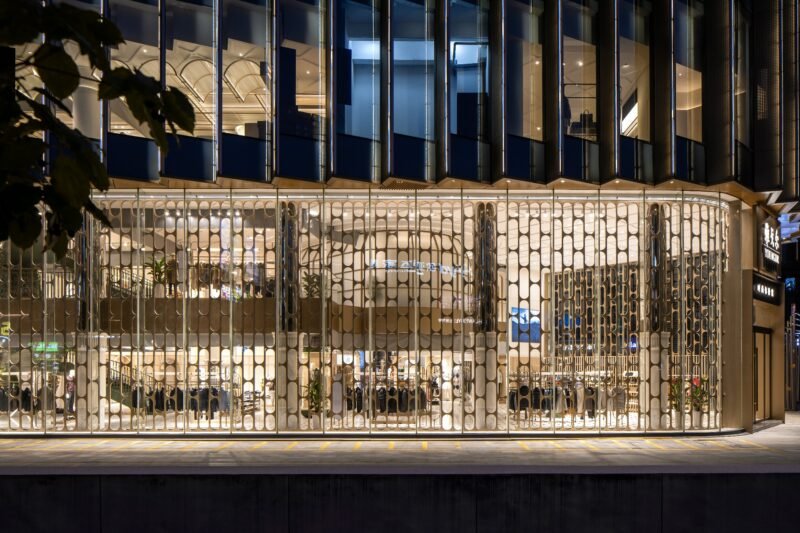
From “Illumination” to “Immersion”: Lighting as Design Strategy
Modern commercial lighting design is evolving into a holistic system that balances visual hierarchy, atmosphere, and energy efficiency:
Outline and wall-wash lighting emphasize structure and geometry, making the architecture pop from its surroundings;
Dynamic effects and material interplay create movement and depth, guiding visual attention and customer flow;
Brand signage zones receive enhanced brightness and clarity to reinforce recognition;
Smart lighting systems adjust brightness according to foot traffic and time of day, reducing energy use while enhancing user comfort;
Increasingly, LED mesh or media facades transform building exteriors into interactive, immersive brand stories.
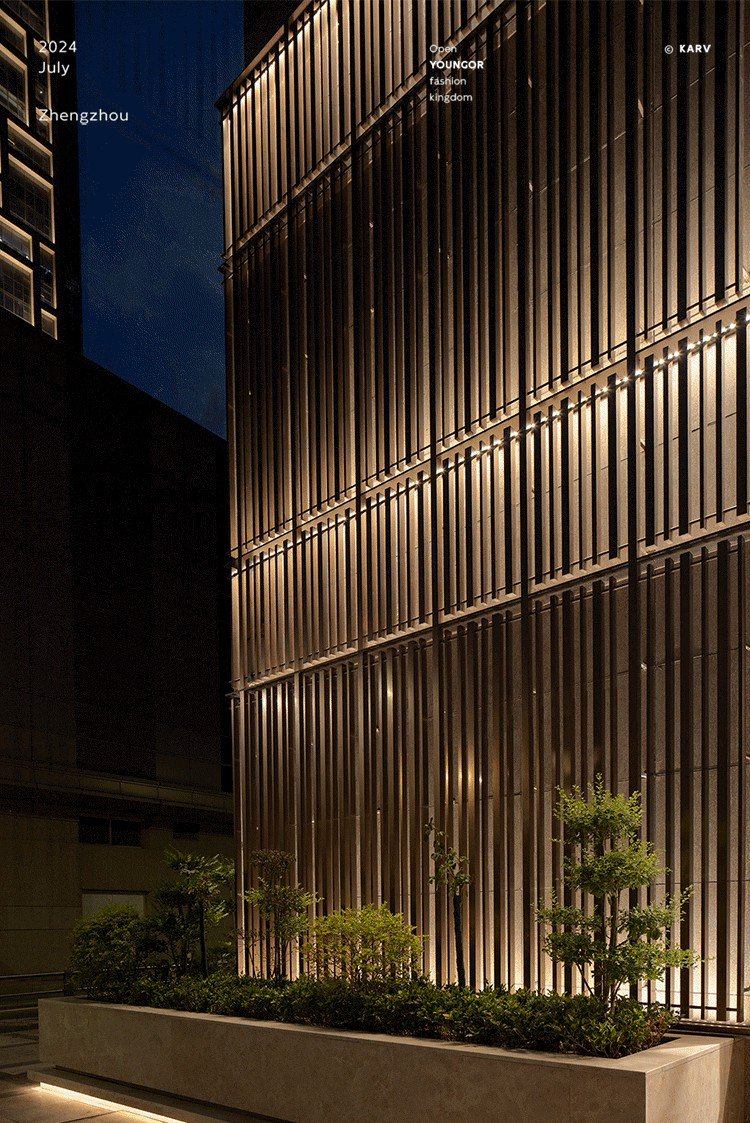
Case Study: YOUNGOR Fashion Experience Center, Guiyang
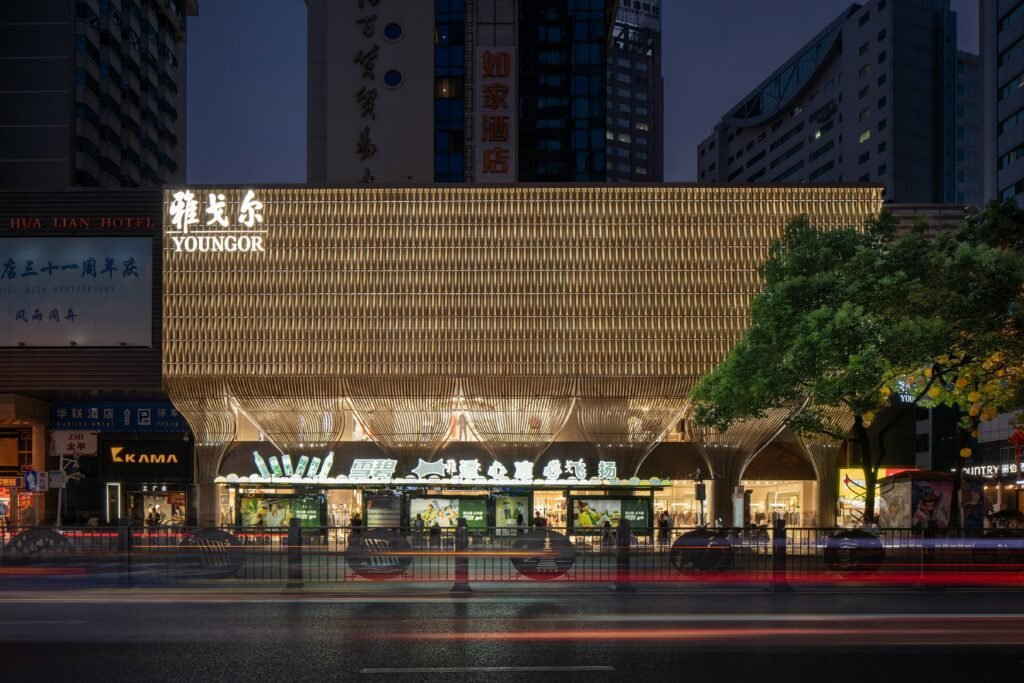
In Guiyang’s bustling Penshuichi commercial district, Karv One Design reimagined the exterior of the YOUNGOR Fashion Experience Center with a design concept inspired by traditional bamboo weaving. Lighting played a crucial role in enhancing the space’s nighttime impact:
Tree-like structures form an abstract bamboo canopy over the facade, with hidden lighting embedded within;
Soft light filters through a grid of bamboo textures, creating a rhythmic glow and drawing attention from afar;
Zoned color temperatures highlight brand areas: neutral white light on main forms and brighter lighting for signage clarity;
After-hours, the lighting dims automatically to conserve energy and reduce light pollution, aligning with sustainability goals.
This project demonstrates how facade lighting can blend local culture, brand identity, and urban aesthetics into one immersive nighttime narrative.
Measuring the Impact of Lighting
Great lighting design goes beyond beauty—it delivers real performance. Consider these measurable outcomes:
Increases in nighttime footfall;
Rise in social media exposure and engagement;
Higher brand recall and spatial recognition;
Reduction in energy consumption through smart systems.
In the era of the “24-hour city,” lighting is the second skin of commercial architecture. It empowers buildings to speak after dark, to connect emotionally with people, and to differentiate brands in crowded urban environments.