
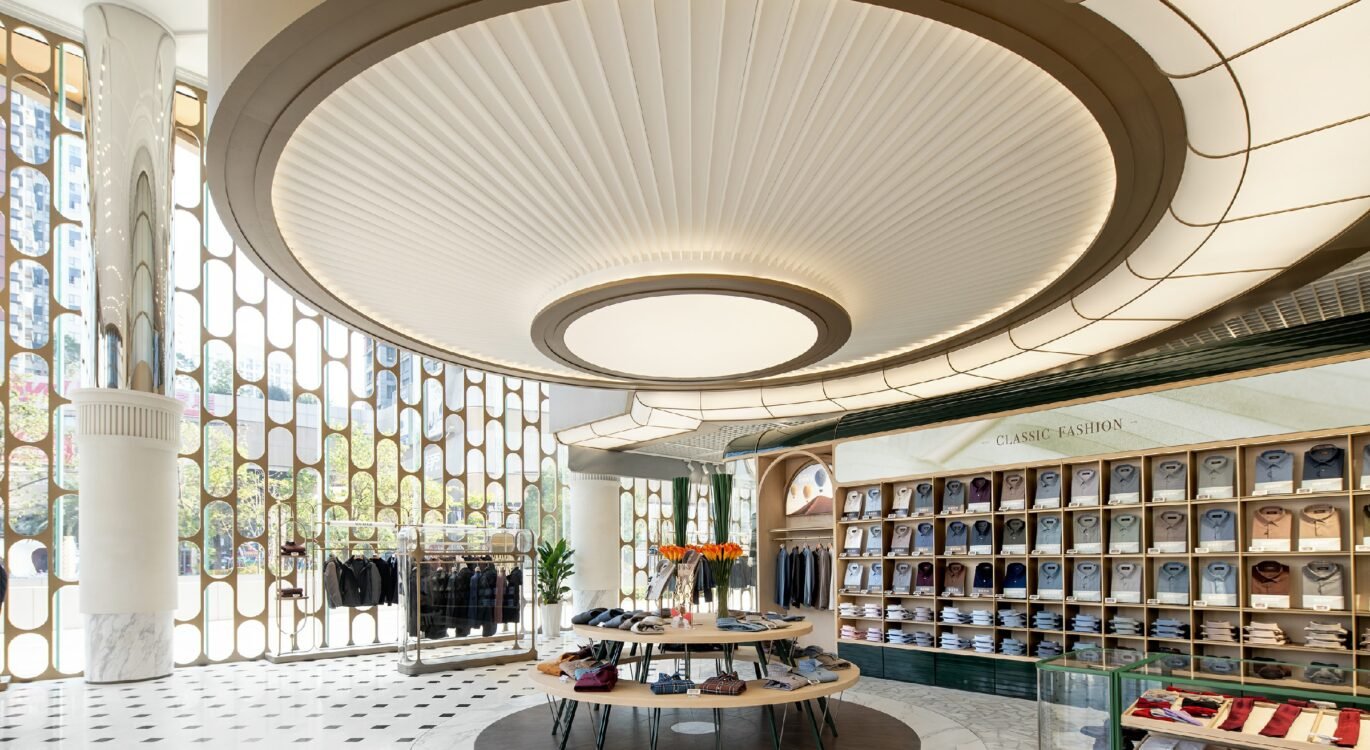
Visual Anchors in Commercial Spaces: Winning Principles of Color, Material, and Form
In the information-saturated commercial battlefield, the time a customer’s gaze lingers is measured in seconds. Exceptional spatial design acts like a precise nautical chart, deploying irresistible visual anchors through strategic combinations of color, material, and form—anchors that not only capture attention but also weave a web of brand memory in the subconscious.
Color: Precise Positioning on the Emotional Coordinate System
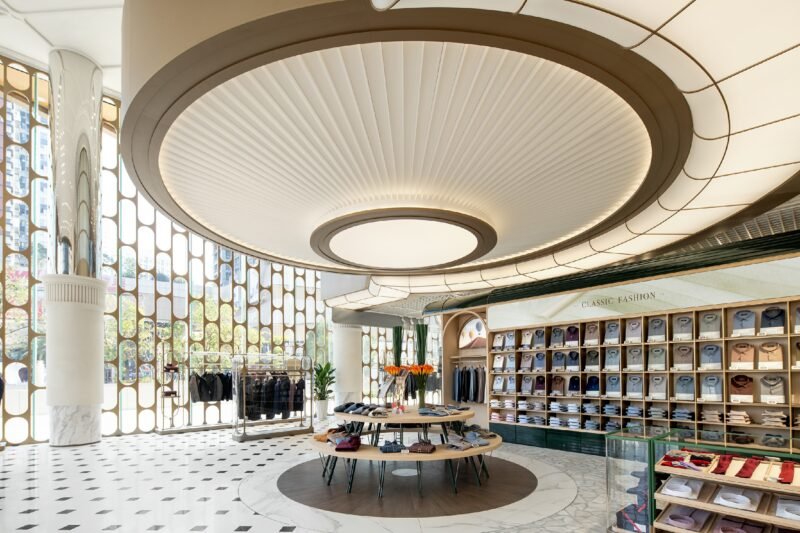
Color is the fastest communication medium in commercial spaces. Fast-food chains use high-saturation red and yellow contrasts to stimulate appetite and a sense of urgency; luxury boutiques employ champagne gold and obsidian black to craft an aesthetics of distance; children’s spaces adopt macaron hues to create a “safety bubble.” Yet true masters know to introduce variables within unity: a high-end beauty store uses soft pink-gray as its main theme but suddenly inserts an electric purple light strip in the makeup-testing area, instantly igniting consumer impulse. Cutting-edge dynamic color systems are already in use—adjusting color temperature automatically based on foot traffic: cool white during peak hours to boost turnover, warm orange during lulls to extend stay times. When color becomes a programmable language of emotion, commercial conversion gains a precise lever.
Material: Invisible Imprints of Tactile Memory
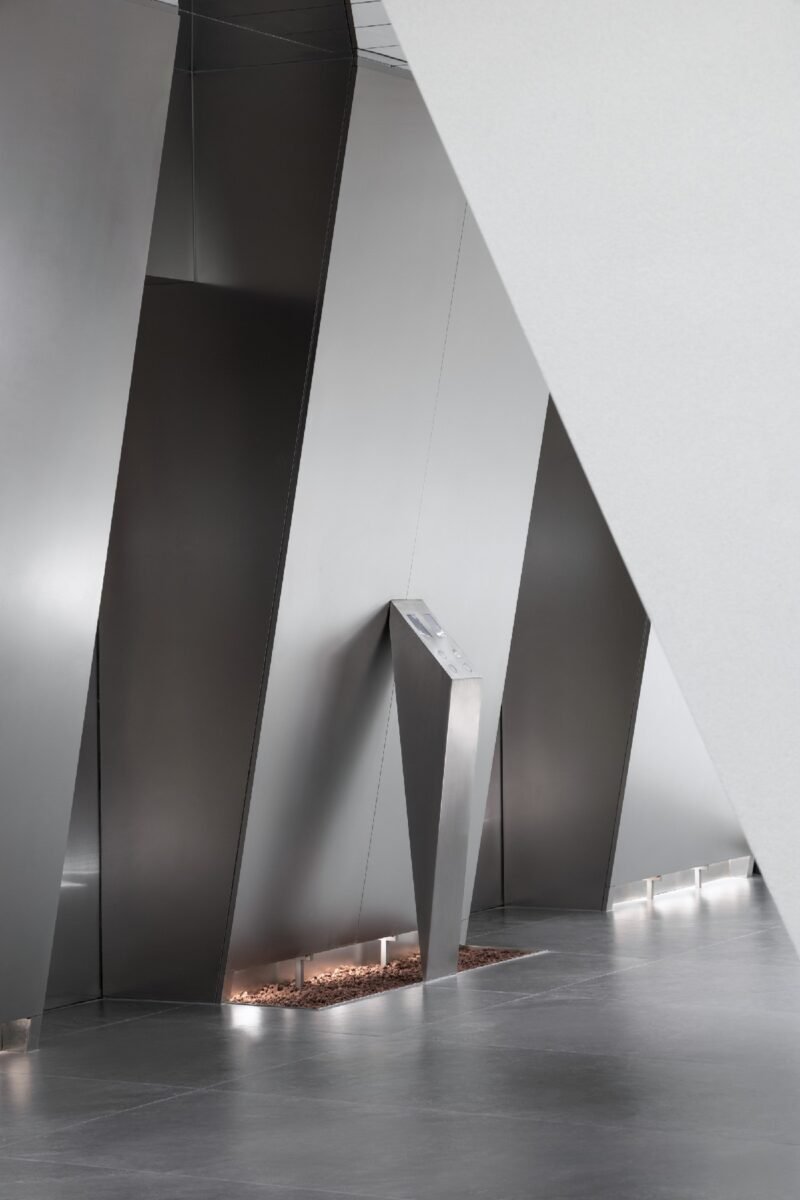
When fingertips brush a hand-chiseled brass bar, or heels click against the cool texture of terrazzo floors, tactile memories of materials embed themselves in neural synapses. Material strategies in commercial spaces must fulfill three missions: textural contrast to create drama (the coexistence of a solid wood table and polished stainless-steel columns); tactile guidance of movement (a rough sandstone wall at the entrance directing customers toward the smooth main hall); and “aging aesthetics” to enhance value (deliberately preserved weathered red brick walls telling stories of historical depth). Smart materials open new dimensions: a tech exhibition hall embeds pressure-sensitive light-emitting tiles in the floor, where visitors’ footprints bloom into rippling light patterns; a clothing store’s fitting rooms use temperature-controlled glass that fogs instantly at the touch, forming a private barrier. When materials evolve from static backdrops to interactive interfaces, commercial narratives gain an immersive script.
Form: Spatial Manipulation Through Geometric Force Fields
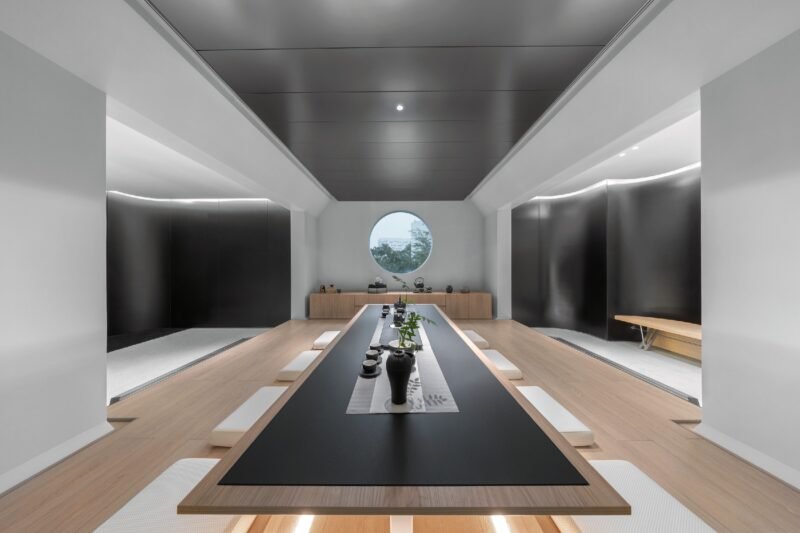
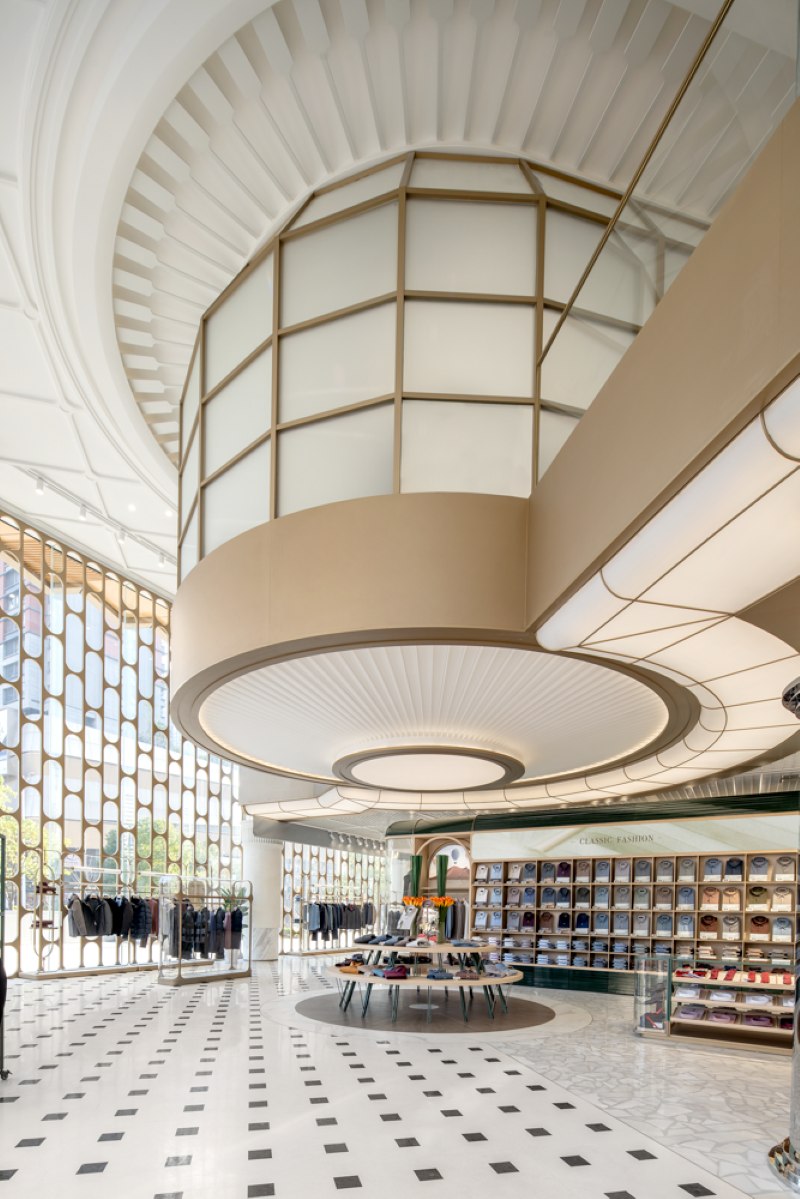
Form is the invisible conductor of commercial spaces. Curved sofas naturally gather social energy, forcing strangers’ gazes to meet; shelves tilted at 15 degrees break visual inertia, increasing product attention by 30%; repeatedly appearing triangular elements (from chandelier frames to floor tile patterns) subtly reinforce brand symbols in the subconscious. Deconstructivist approaches are subverting tradition: a bookstore splits columns into floating bookcases; a restaurant suspends tables from the ceiling like giant pendulums. These unconventional forms are not just visual bombs but precise controllers of spatial flow—tilted mirrored walls refract hidden exhibition areas, wavy ceilings guide customers toward cash registers. When geometry becomes a navigator of desire, commercial conversion obeys physical laws.
The Symphonic Principle of Three-Dimensional Anchors
True spatial magic emerges in moments where color, material, and form resonate:
The collusion of color and material: Sage green paint takes on entirely different emotional temperatures on matte stone versus silk upholstery.
The duet of form and light: A double-curved ceiling weaves spotlight beams into a dynamic spiderweb.
The golden ratio of anchor matrices: 70% unified elements to set the tone + 25% contrast to create tension + 5% artistic installations to ignite memory.
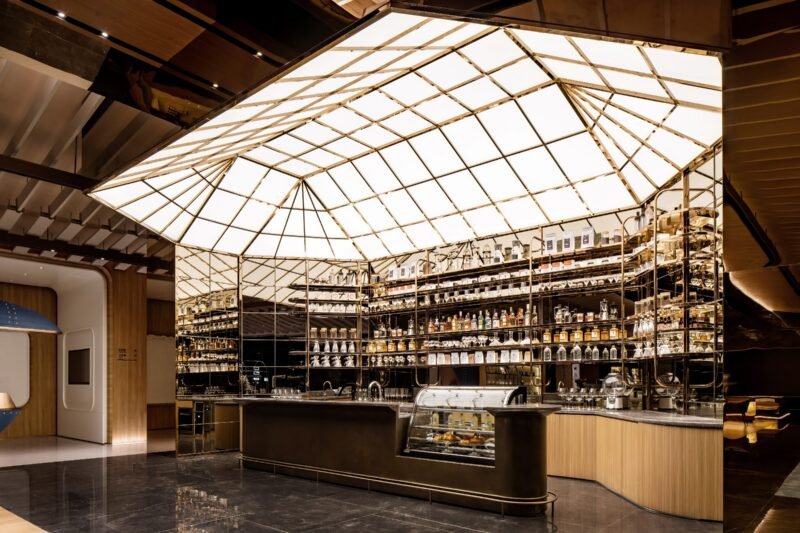
In the arena of attention economics, visual anchors have transcended mere decoration, evolving into navigation systems for consumer behavior. When every inch of color calculates emotional fluctuations, every material encodes tactile passwords, and every curve guides movement, commercial spaces elevate from containers to massive sensory triggers. Remember: Consumers never buy products themselves—they buy carefully designed cognitive moments—the dopamine sparked by the interplay of color and material, the mysterious directives that geometric forms whisper to the subconscious.